
The Queen’s Journal – #34

This week’s edition:
Why reducing cycle time is not only about robot speed
China is placing robotics at the centre of its industrial strategy
The rise of socially assistive robotics beyond industrial environments
ABB Robotics is launching PickMaster Lite for robotic picking
A new milestone for the OTTAVA robotic surgical system
NVIDIA is expanding partnerships to accelerate Physical AI in robotics
What You Should Know Before Buying a Robot
Reducing cycle time is often one of the main reasons companies invest in automation. Cycle time is the total time required for a process to complete one full operation. Many people assume that adding a faster robot will automatically speed up production, but in reality, the robot is only one part of the process.
A robot cycle is not isolated. It depends on upstream and downstream equipment, part presentation, tooling, machine waiting times, communication delays, safety conditions, and operator interaction. If the robot must constantly wait for another machine, conveyor, sensor, or manual operation to finish, increasing robot speed alone may not improve total production output.
In many cases, the real bottleneck is somewhere else in the line. A faster robot may simply move the delay to another process while increasing wear, instability, or unnecessary complexity. Faster motion also affects acceleration, payload behaviour, vibration, and safety requirements, all of which directly impact long term reliability.
Before defining cycle time targets, check:
What is the actual bottleneck of the production line?
Can upstream and downstream processes support a faster cycle?
Will the robot spend time waiting for other equipment or operators?
How do safety conditions and process stability affect production speed?
A faster robot does not automatically mean a faster production line. Before investing in automation, the full process must be evaluated to understand where the real bottlenecks exist and whether the robot will actually improve overall production flow.
Top Robotics Updates
1 - China is putting robotics at the centre of its industrial strategy
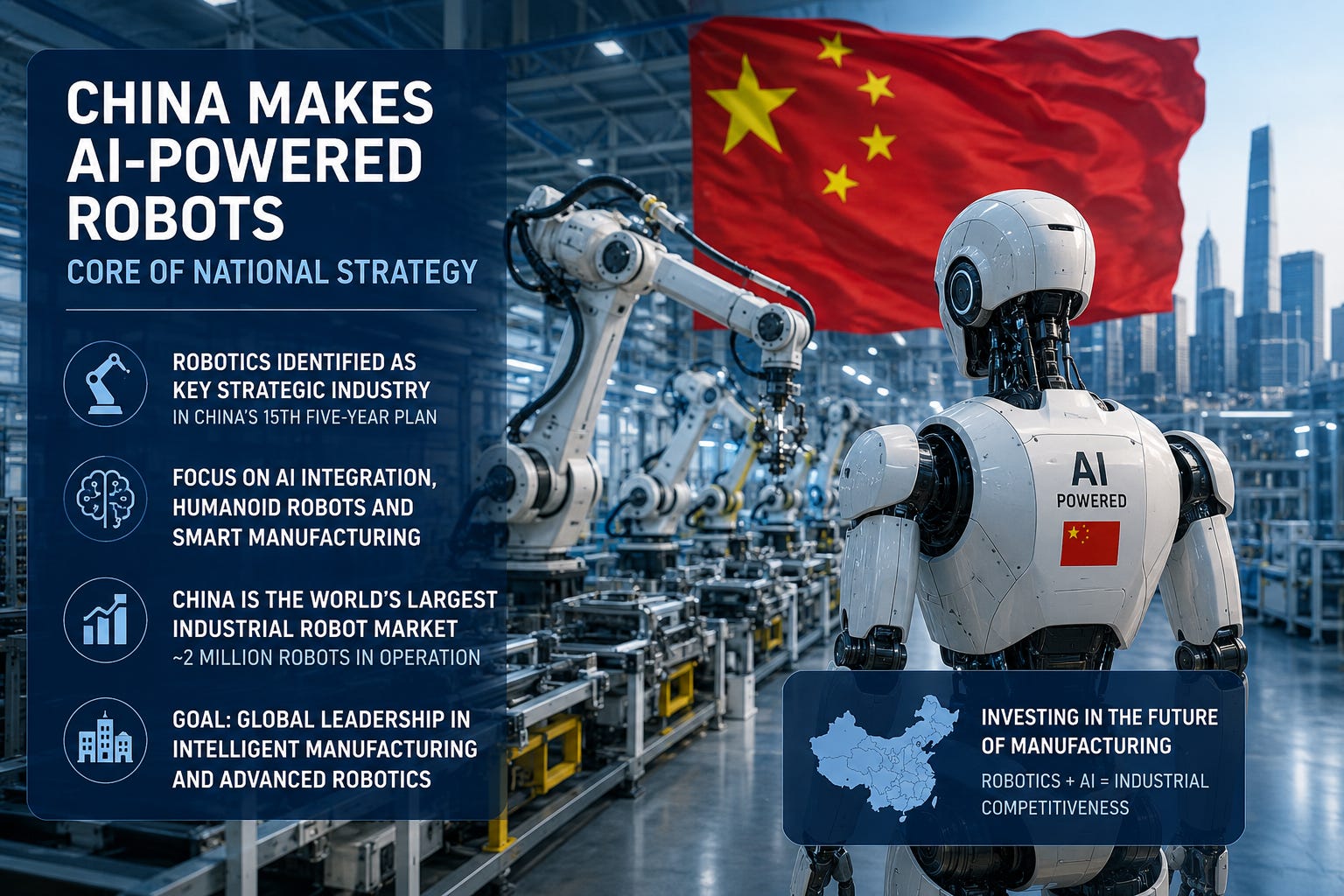
China is continuing to expand its focus on robotics and AI-driven manufacturing, with the International Federation of Robotics highlighting robotics as a key part of the country’s latest national industrial strategy.
According to the IFR, China’s 15th Five-Year Plan places strong emphasis on the development of advanced robotics, intelligent manufacturing systems, and AI integration across industrial sectors. The strategy includes support for humanoid robotics, smart manufacturing technologies, and domestic robotics innovation.
China already represents one of the world’s largest industrial robotics markets, with around 2 million industrial robots currently operating across the country. The government’s latest strategy aims to further strengthen automation capabilities while accelerating the development of AI-powered robotic systems.
The announcement reflects a broader shift happening globally, where robotics is increasingly being treated not only as an automation tool, but also as a strategic technology linked to manufacturing competitiveness, AI leadership, and industrial resilience.
Why does this matter? Governments are increasingly viewing robotics and AI as critical technologies for the future of manufacturing. China’s continued investment in intelligent automation could further accelerate global competition in industrial robotics, humanoids, and smart factory development.
2 - The rise of socially assistive robotics
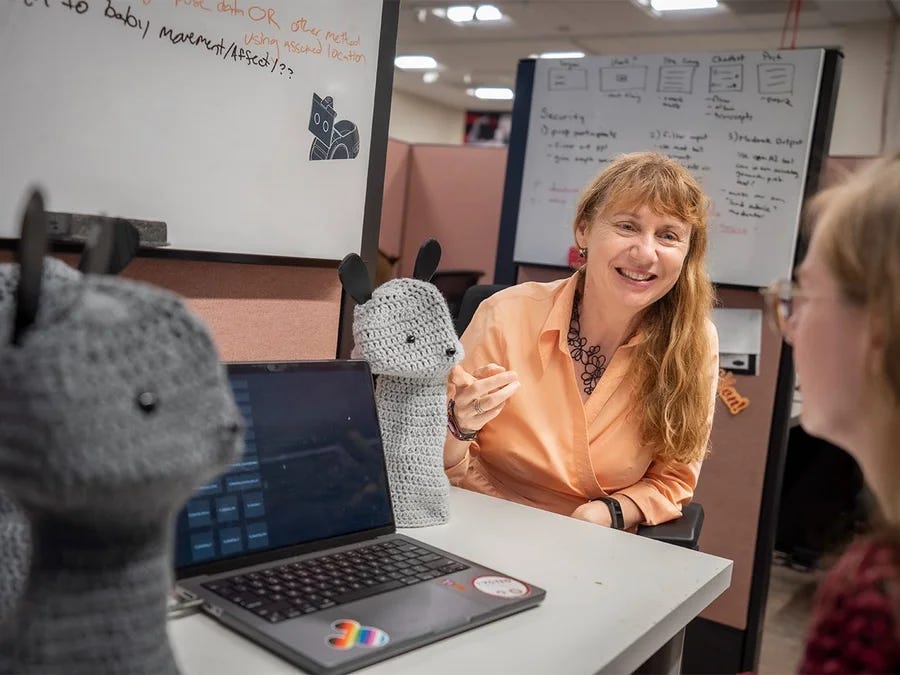
Roboticist Maja Mataric, the pioneer of socially assistive robotics, has helped shape a different direction for robotics focused on human interaction, behavioural support, and wellbeing rather than physical labour alone.
According to IEEE Spectrum, Matarić’s research explores how robots can support people in areas such as autism therapy, rehabilitation, elderly care, mental health, and education. Her work focuses on creating robotic systems capable of encouraging engagement, assisting with therapy, and supporting cognitive and social development through human-robot interaction.
One of the best-known projects from her lab is Bandit, a socially assistive robot designed to interact with children with autism spectrum disorder through games, communication exercises, and behavioural encouragement. Her research has also explored robotic systems that support elderly users and stroke patients during rehabilitation exercises.
Matarić’s work highlights how robotics is increasingly expanding beyond industrial automation into more human-centred applications where communication, trust, and emotional interaction become essential parts of the technology.
Why does this matter? As robotics and AI continue evolving, socially assistive robotics could become an increasingly important part of healthcare, rehabilitation, and education, expanding how robots support people beyond traditional industrial environments.
3 - ABB Robotics launches PickMaster Lite
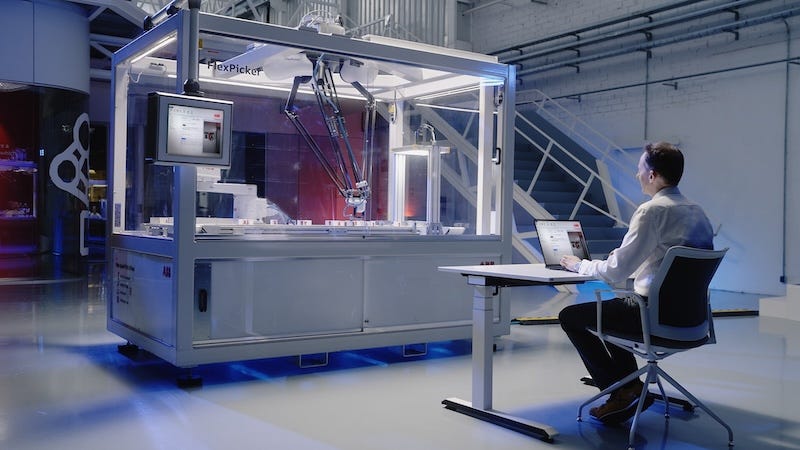
ABB Robotics has launched PickMaster® Lite, a simplified version of its robotic picking software designed to support faster deployment and easier integration across industrial applications.
The software is focused on robotic picking and handling tasks in industries such as packaging, food, logistics, and consumer goods. ABB Robotics states that the platform is designed to reduce engineering complexity while helping manufacturers deploy automation systems more efficiently.
One of the main focuses of PickMaster® Lite is simplifying commissioning and setup. The software is designed to make robotic picking applications more accessible for manufacturers and integrators looking to implement automation without highly complex deployment processes.
The launch reflects a broader movement in industrial automation, where companies are increasingly prioritising ease of deployment, scalability, and software integration alongside robot hardware performance.
Why does this matter? Manufacturers are looking for automation systems that are faster to deploy and easier to integrate into existing production environments. Solutions that reduce setup complexity can help accelerate automation adoption across a wider range of industries.
4 - Robotic surgical system reaches new clinical milestone
Johnson & Johnson announced the completion of the first clinical study for its investigational OTTAVA robotic surgical system, marking an important milestone in the company’s expansion into robotic-assisted surgery.
The multicentre study evaluated the system during Roux-en-Y gastric bypass procedures and focused on the safety and performance of the platform. According to the company, the results demonstrated the feasibility of the system’s architecture, which integrates robotic arms directly into the operating table.
One of the key aspects of the OTTAVA system is its compact design. Unlike many traditional surgical robotic platforms, the robotic arms are designed to remain integrated within the table structure, helping reduce the space required inside operating rooms while supporting complex surgical procedures.
The announcement comes as competition in surgical robotics continues to grow, with major medical technology companies investing heavily in robotic-assisted procedures, AI integration, and workflow optimisation for hospitals.
Why does this matter? Surgical robotics continues to expand beyond highly specialised applications. Systems designed to improve workflow integration and reduce operating room complexity could help make robotic-assisted surgery more accessible across healthcare environments.

5 - NVIDIA expands partnerships to accelerate Physical AI in robotics
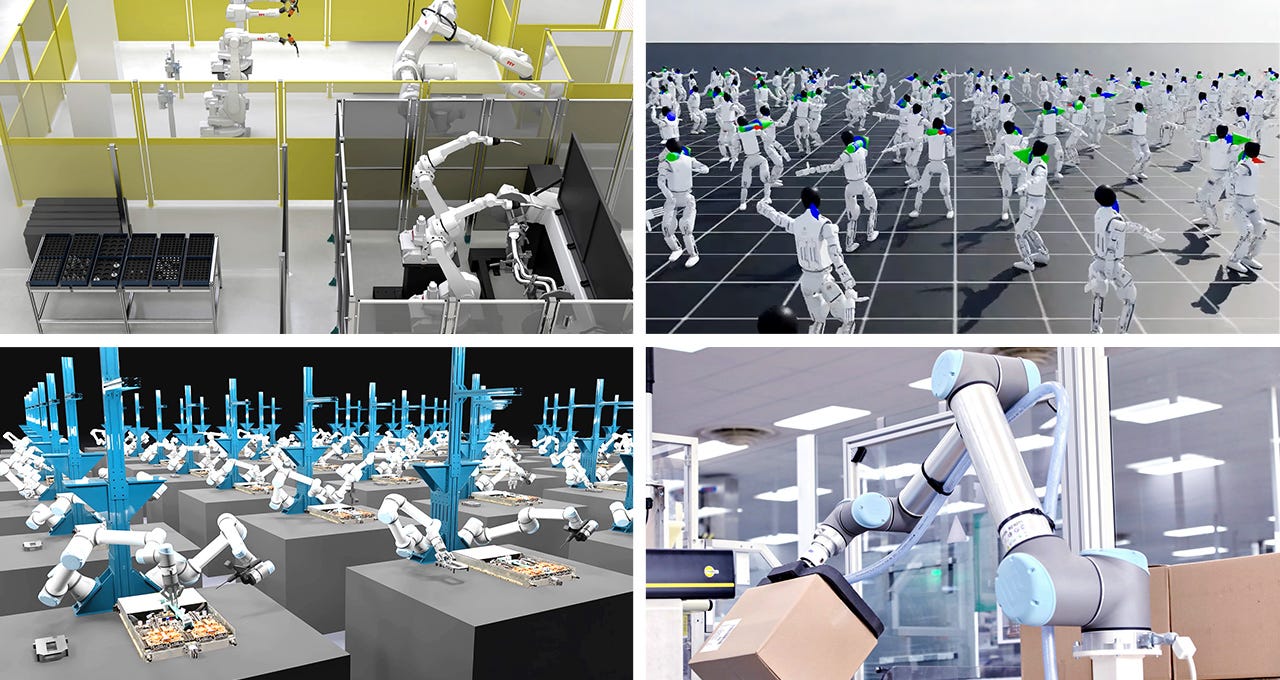
NVIDIA announced expanded collaborations with several global robotics and automation companies, including ABB, FANUC, KUKA, Universal Robots, and Yaskawa, as part of its push to accelerate the development of Physical AI for industrial robotics.
The collaborations focus on the use of NVIDIA technologies such as Isaac Sim and Omniverse to support robot simulation, AI training, digital twins, and synthetic data generation. The goal is to help robotics companies train and validate robotic systems in virtual environments before deployment into real-world industrial applications.
One of the main focuses is enabling robots to operate in more dynamic and less structured environments. Instead of relying only on fixed programmed tasks, companies are increasingly exploring AI-driven systems capable of adapting to changes, understanding environments, and improving performance through data and simulation.
The announcement also highlights the growing connection between industrial robotics, humanoid robotics, and AI infrastructure, with NVIDIA positioning simulation and AI platforms as a central part of future automation ecosystems.
Why does this matter? Industrial robotics is moving beyond standalone robot programming toward AI-driven automation ecosystems built around simulation, data, and adaptive robotic behaviour. Digital twins and virtual training environments are becoming increasingly important as companies look to accelerate deployment and improve flexibility in manufacturing systems.
Good to Know:
This will be my first time attending the Automate Show in Chicago, and I’m excited to finally experience one of the biggest automation events in the industry in person.
I’ll be there throughout the week creating content, exploring new technologies, and connecting with companies across robotics and industrial automation while sharing everything happening directly from the show floor.
See you in Chicago!

Job Offers:
Stay updated with the latest job opportunities in robotics and automation.
THRYVE: Head of Robotics
Venogy Talent: Automation Engineer
R3 Robotics: Engineering Technician
HCLTech – Hungary: Junior Robotics Software Engineer
Agile Robots SE: Robot Teleoperator
Estun Automation: Automation Engineer
NEURA Robotics: Robotics Service/Maintenance Technician
Want more robotics content? 🤖
Watch my videos on YouTube @TheRobotQueen
Follow me on Instagram @therobotqueen_
Join my WhatsApp Channel
Join my exclusive community: Robotics Mindset Community