
The Queen’s Journal – #33
Agile Robots pushes AI-driven automation, Sereact advances Physical AI, ABB launches new PoWa cobots, and a £150B robotics opportunity emerges for the UK and Europe.

Top Robotics Updates
1 - Agile ONE Signals a Broader Shift in AI Driven Automation
At HANNOVER MESSE, the spotlight was not only on humanoid robotics but on the strategic vision behind it. The unveiling of new technologies highlighted how automation is evolving beyond individual machines toward intelligent, interconnected systems.
Agile Robots SE , together with Franka Robotics, showcased an integrated ecosystem, offering the full stack of robotics solutions, including the hardware, the AI-driven software and the real, large-scale data behind it. Their focus extends beyond hardware to include data, system integration, and scalable automation solutions designed for modern manufacturing.
A key element of this approach is the humanoid robot Agile ONE. Rather than replacing existing technologies, it is designed to complement them, enhancing flexibility and supporting applications where traditional robots may face limitations. This reflects the growing influence of Physical AI, enabling machines to perceive, learn, and adapt in dynamic environments.
Supporting this transformation, platforms such as the Franka Research 3 robot continue to bridge the gap between research and industrial deployment. Together, these developments signal a broader shift toward AI-driven automation ecosystems that are set to define the next generation of smart factories.
Why does it matter? This development highlights a broader shift in industrial automation from standalone machines to intelligent, connected ecosystems. Humanoid robots such as the Agile ONE are not intended to replace existing technologies, but to enhance flexibility in environments designed for human workflows.
2 - Sereact raises $110M and launches Cortex 2.0
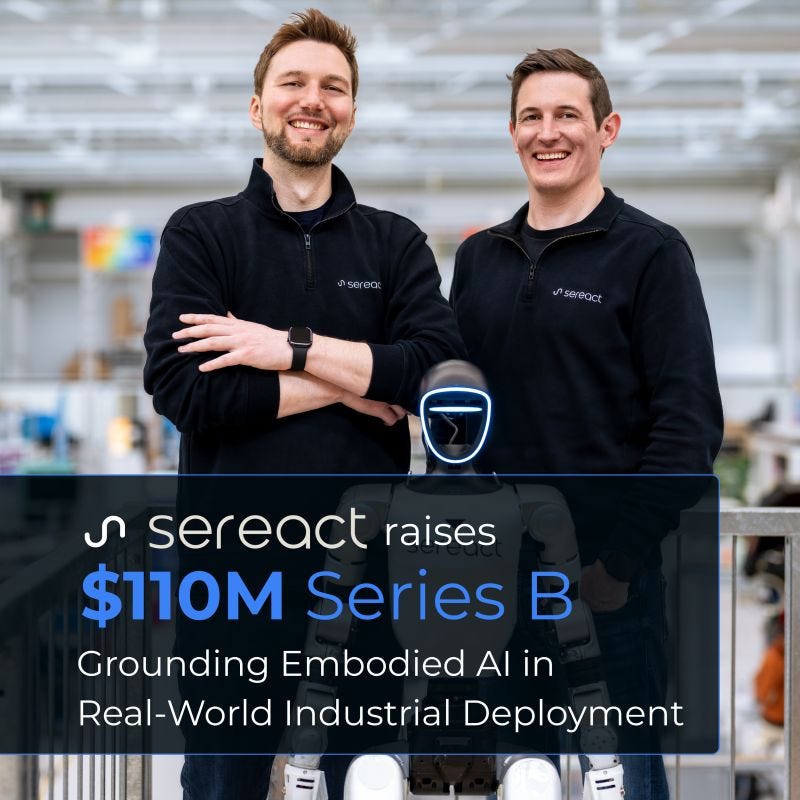
Sereact has announced $110M in Series B funding, alongside the launch Cortex 2.0 and its expansion into the United States. The announcement reflects a broader shift in how Physical AI is being developed and deployed in real industrial environments.
One of the main challenges in robotics today is data. Many companies are building world models, systems that allow robots to predict outcomes before acting. However, most of these models are trained in simulation, which does not fully represent the complexity and variability of real production environments.
Sereact has taken a different approach. Instead of relying on synthetic data, the company has built its AI through real-world deployments. By operating systems directly in production and learning from failures and variations on the shop floor, it has created a continuous data loop grounded in reality.
This approach is reflected in the scale of its operations, with more than 200 systems deployed across Europe, over 1 billion production picks, and a rate of one human intervention per 53,000 picks. This dataset forms the foundation of Cortex 2.0.
Cortex 2.0 introduces a world model built on real production data. The system evaluates multiple possible actions before execution, selects the most likely to succeed, and updates its decisions in real time. This allows robots to move beyond repetitive picking tasks into more complex applications such as assembly under tension, kitting, and high-precision placement where contact and accuracy are critical.
Why does this matter? The shift goes beyond adding AI to existing systems. It highlights a transition from models trained in controlled environments to systems that learn directly from real-world operations. In this context, data from production is becoming the key factor in building reliable and scalable Physical AI.
3 - ABB Robotics launches PoWa cobot family for industrial tasks
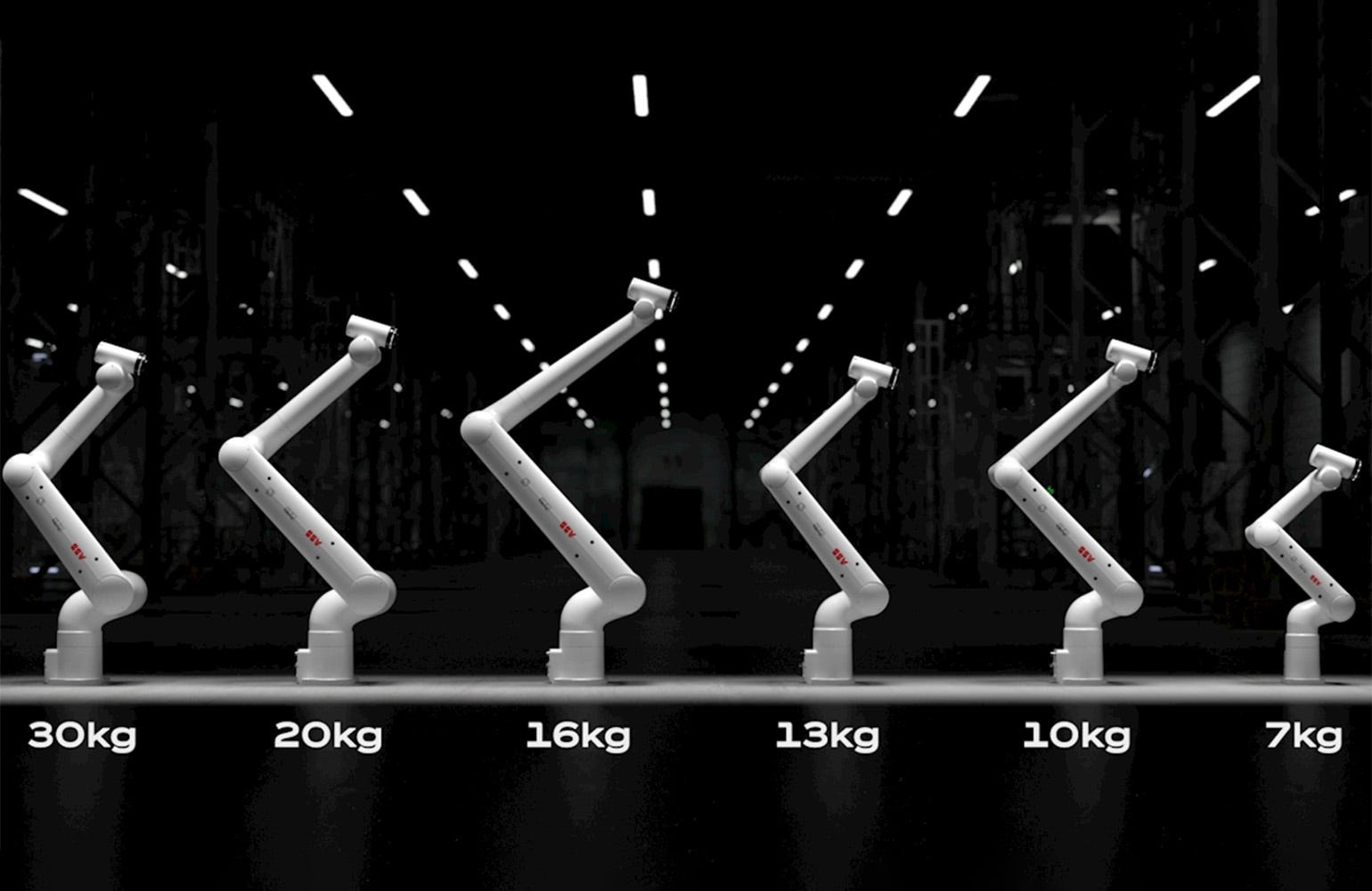
ABB Robotics has introduced a new cobot family called PoWa, designed to handle more demanding industrial applications while remaining simple to deploy and operate.
The new platform focuses on combining ease of use with higher performance, targeting tasks that traditionally required larger industrial robots. This includes applications such as machine tending, material handling, and assembly, where both precision and payload matter.
One of the key aspects of the PoWa family is its plug-and-play approach. The system is designed to reduce integration time, making it easier for companies to deploy automation without complex setup or specialised programming. This reflects a broader shift towards more accessible robotics solutions, especially for manufacturers looking to scale automation quickly.
ABB is positioning PoWa as a solution that bridges the gap between traditional industrial robots and collaborative systems. While cobots are often associated with lighter tasks, this new family aims to expand their role into more robust industrial use cases.
Why does this matter? The launch highlights how collaborative robotics is evolving. It is no longer just about safety and ease of use, but about bringing higher performance into flexible, user-friendly systems that can operate directly on the shop floor.
4 - The UK could unlock £150 billion robotics opportunity
techUK has released a new report highlighting a major opportunity for robotics in the United Kingdom, estimating the sector could contribute up to £150 billion to the economy.
The report points to robotics and automation as key drivers of productivity, especially in industries facing labour shortages and increasing operational costs. Sectors such as manufacturing, logistics, healthcare, and agriculture are expected to benefit the most from wider adoption.
However, unlocking this potential will depend on more than just technology. The report highlights the need for stronger investment, better infrastructure, and clearer national strategies to support innovation and deployment at scale.
Skills also remain a critical factor. As robotics adoption grows, there is increasing demand for a workforce that understands how to operate, integrate, and maintain these systems in real environments.
Why does this matter? This is not just about the UK. It reflects a broader opportunity for Europe to strengthen its position in robotics and automation. At a time when global competition is accelerating, the ability to invest, scale, and develop talent across the region will define how competitive European industry remains in the years ahead.
5 - Flex and Teradyne expand partnership to scale automation
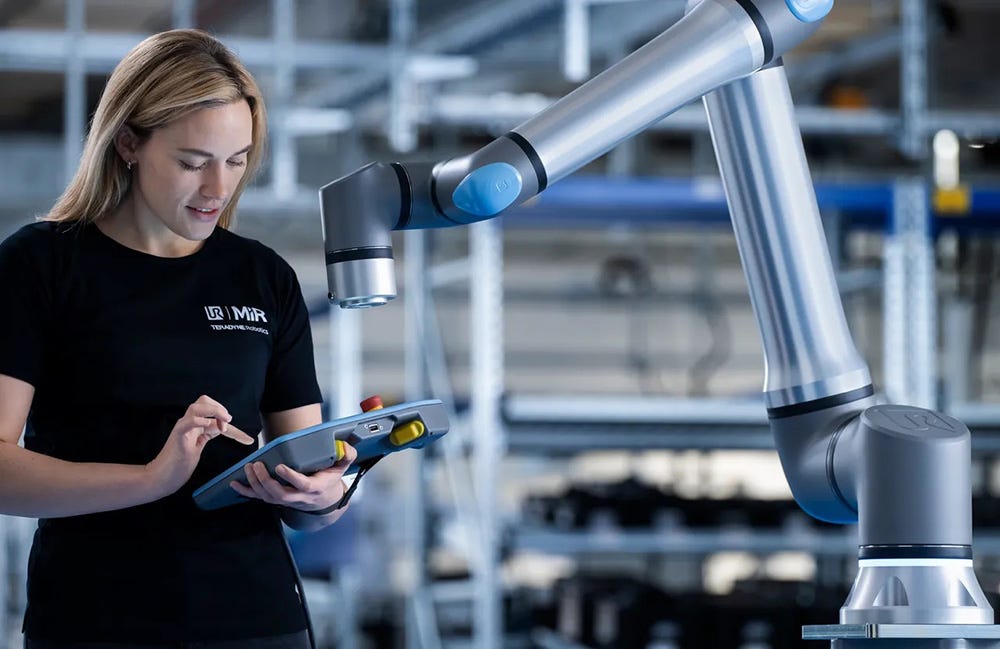
Flex and Teradyne Robotics have announced an expanded partnership aimed at scaling intelligent automation across global manufacturing operations.
The collaboration focuses on deploying advanced robotics solutions across Flex’s production sites, combining manufacturing expertise with robotic systems from Teradyne’s portfolio, including collaborative and mobile robots.
The goal is to accelerate automation adoption while maintaining flexibility in production. By integrating robotics more deeply into manufacturing workflows, the partnership aims to improve efficiency, consistency, and responsiveness to changing demand.
Another important aspect is the focus on intelligent automation. This goes beyond deploying robots for isolated tasks and moves towards connected systems that can adapt and scale across multiple facilities.
Why does this matter? This reflects a broader shift in manufacturing. Companies are no longer testing automation in isolated pilots, but scaling it across global operations. The challenge is no longer whether to automate, but how to do it in a way that is flexible, connected, and ready to evolve with production needs.
Weekly Tutorial
How to set up your Ned3 Pro via WiFi?
Connecting your robot correctly is one of the first steps to start working with it. In this tutorial, I show you how to set up the Ned3 Pro from Niryo via WiFi in a simple and practical way.
This is especially useful if you want to get your robot up and running quickly without dealing with complex configurations.
👉 Access the full step-by-step tutorial.
Good to Know:
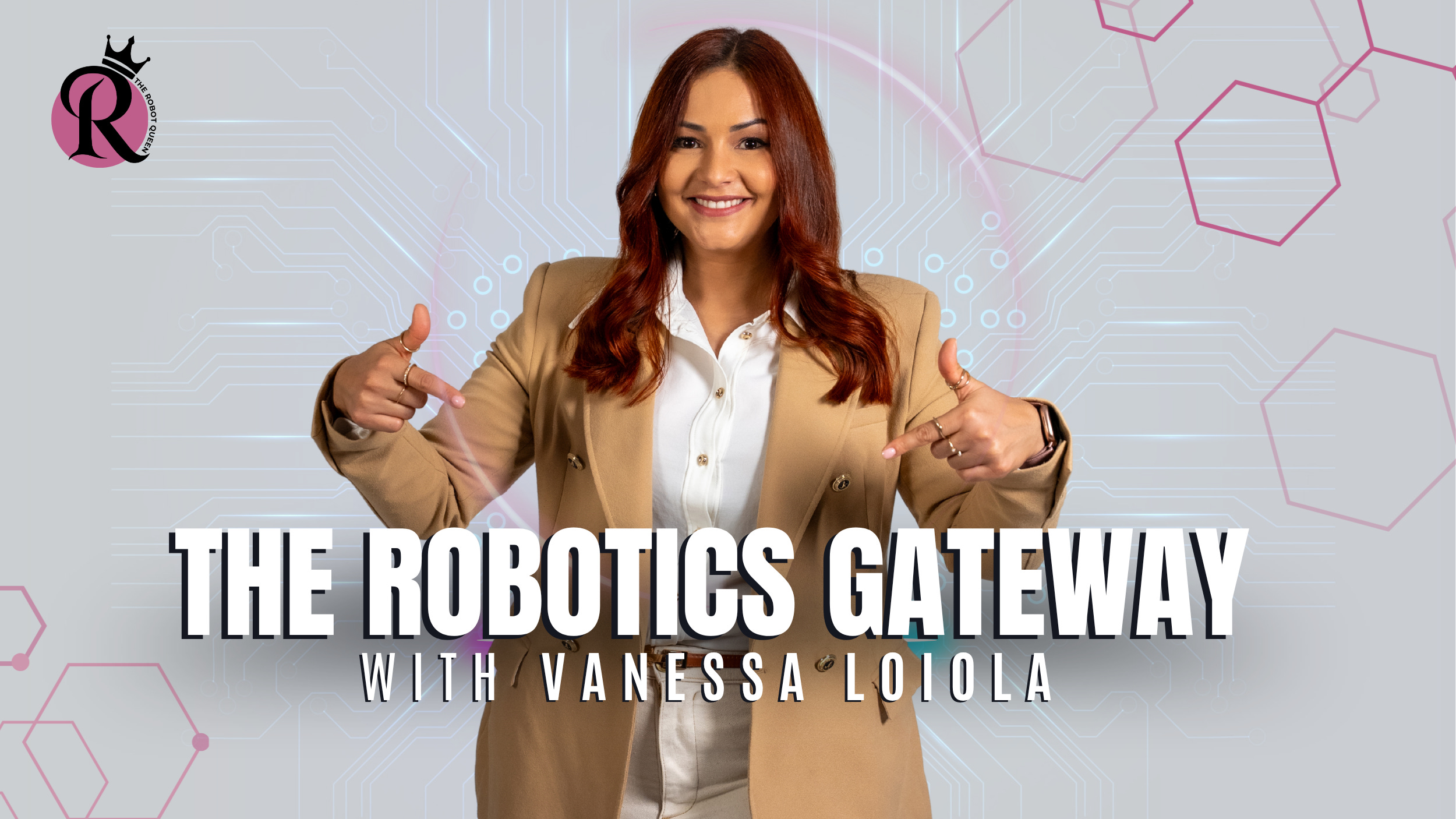
I’m excited to share the launch of the first training inside The Robot Queen Academy: The Robotics Gateway.
The training is designed to help you build a clear foundation in industrial robotics in 21 days, focusing on the concepts that matter to understand how the industry actually works.
One of the biggest challenges today is not access to information. It’s direction. Many people spend time watching videos and jumping between topics, but never build a structured understanding.
The Robotics Gateway was created to solve this. It provides a clear path to connect the fundamentals in a simple and practical way.
👉 Get access to the training: therobotqueen.eu
Want more robotics content? 🤖
Watch my videos on YouTube @TheRobotQueen
Follow me on Instagram @therobotqueen_
Join my WhatsApp Channel
Join my exclusive community: Robotics Mindset Community