
The Queen’s Journal – #32
Niryo unveiled the NATE platform, while the IFR reported rising global robot density. Epson introduced its CX-A 6-axis robots, AgiBot marked its 10,000th humanoid robot, and AES deployed Maximo.

Top Robotics Updates
1 - Niryo Launches AI-Ready NATE Platform
At Global Industrie 2026, Niryo presented NATE, a new modular robotics platform designed to combine hardware, software, and AI-ready capabilities into a single ecosystem.
Instead of focusing on a standalone robot, the company is shifting towards a platform-based approach, where robotics systems are built as flexible, interconnected solutions.
NATE brings together robot arms, proprietary software tools, and development interfaces into a unified environment where hardware and software are developed together, simplifying integration and deployment. As part of this approach, Niryo also introduced the NR series, a new generation of robotic arms designed to move beyond education and into early-stage industrial applications, along with the development of its own actuators, reinforcing a vertically integrated robotics stack where key components are controlled in-house.
A key part of the announcement is the alignment with what is increasingly referred to as Physical AI, where robotic systems are expected to operate in less structured environments and handle more variability. In this context, modularity becomes essential, enabling faster adjustments without redesigning entire systems.
The platform is primarily positioned for training centres, research environments, and early-stage industrial applications, rather than heavy-duty production. However, it reflects a broader shift in the industry, where robotics is moving from fixed, highly engineered cells towards more adaptable and software-driven systems.
Another important aspect is the focus on European-developed technology, reinforcing the trend of regional ecosystems building their own robotics solutions.
Why does this matter? The shift goes beyond modularity. As AI becomes more relevant in industrial environments, it is becoming clear that many robotic systems were not designed to support it. Built for repetition in controlled conditions, they are difficult to adapt when requirements change. Platforms like NATE reflect a different approach, where systems are designed from the start to be flexible, modular, and ready to integrate intelligence as part of the architecture, not as an add-on.
2 - Global Robot Density Continues to Rise, IFR Reports
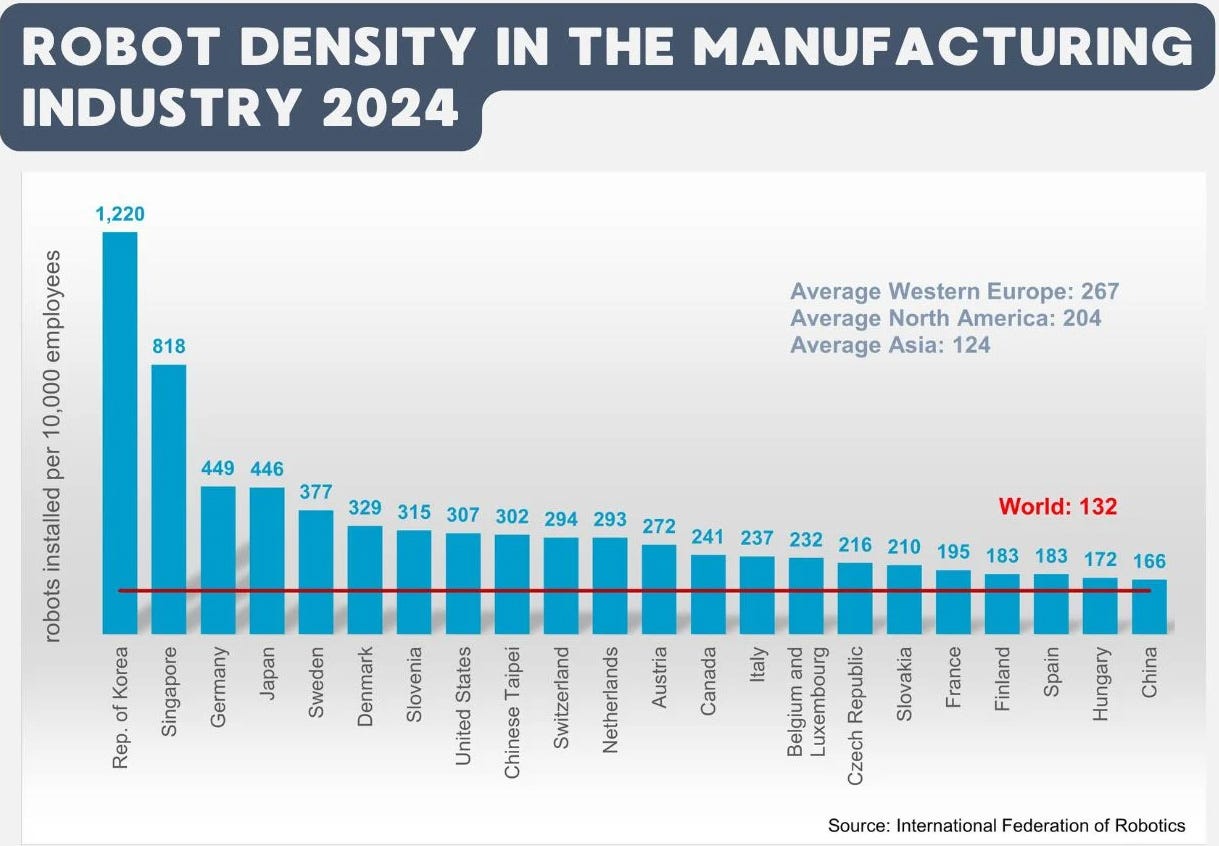
International Federation of Robotics has reported continued growth in robot density across major industrial regions, highlighting the accelerating adoption of automation worldwide. The latest findings indicate that the number of industrial robots per 10,000 employees is increasing across Europe, Asia, and the Americas, reflecting sustained investment in advanced manufacturing technologies.
According to the report, Asia remains the global leader in robot adoption, driven by major manufacturing economies such as China, Japan, and South Korea. Europe continues to demonstrate strong automation levels, particularly in countries like Germany, Sweden, and Switzerland, while the Americas show steady progress, led by the United States. These trends underline the strategic importance of robotics in enhancing productivity, competitiveness, and industrial resilience.
The data confirms that automation is becoming a cornerstone of modern manufacturing, with rising robot density serving as a key indicator of technological advancement and economic strength. As industries navigate labour shortages and increasing demand for efficiency, robotics continues to play a central role in shaping the future of global production.
Why does this matter? Rising robot density is a clear indicator of industrial competitiveness and technological maturity. As automation adoption accelerates across leading economies, it sets new benchmarks for productivity, efficiency, and resilience. Organisations that align their strategies with these trends will be better positioned to remain competitive in an increasingly automated global market.
3 - Epson Robots Launches CX-A Series of 6-Axis Industrial Robots
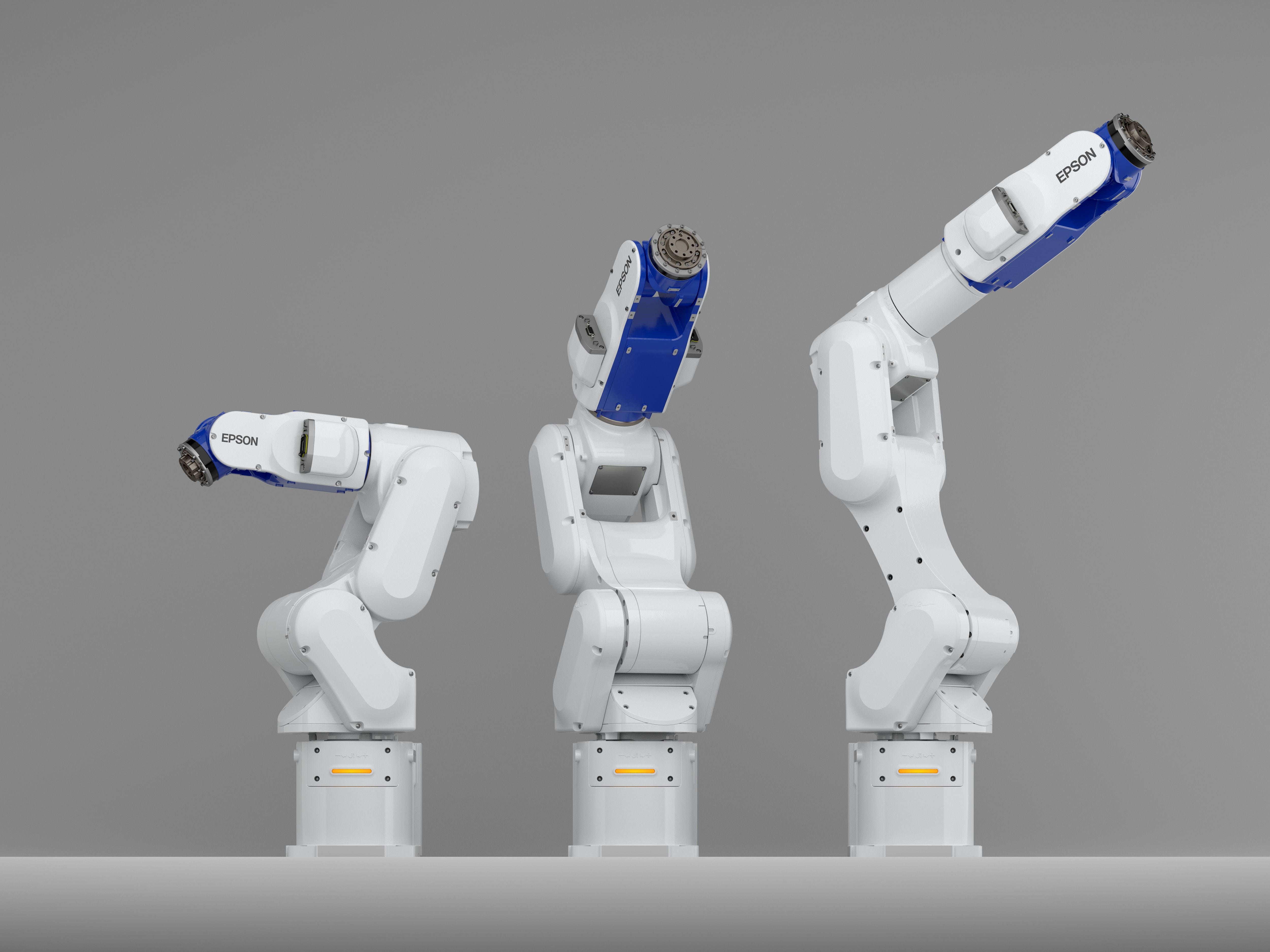
Epson Robots Europe has introduced the new CX-A series, a range of high-performance 6-axis industrial robots unveiled in early April 2026. The lineup includes multiple configurations with payload capacities of up to 7 kg and reach options from 600 mm to 900 mm, designed to support precision-driven applications across industries such as electronics, automotive, medical technology, and logistics.
The CX-A series is engineered to deliver enhanced rigidity, improved accuracy, and faster cycle times, meeting the demands of high-speed and high-precision manufacturing environments. The new robots expand Epson’s industrial portfolio, strengthening its presence beyond its well-established SCARA offerings.
Equipped with advanced technologies such as GyroPlus vibration reduction and battery-less encoders, the CX-A robots are designed to simplify integration and reduce maintenance requirements. Cleanroom and IP-rated variants are also available, enabling deployment in controlled and demanding production environments.
Why does this matter? The CX-A series expands the availability of compact, high-precision automation solutions, enabling greater flexibility in production environments. As manufacturers seek to optimise processes, improve quality, and reduce costs, innovations like these broaden the range of applications that can be efficiently automated.
4 - AgiBot Rolls Out Its 10,000th Humanoid Robot
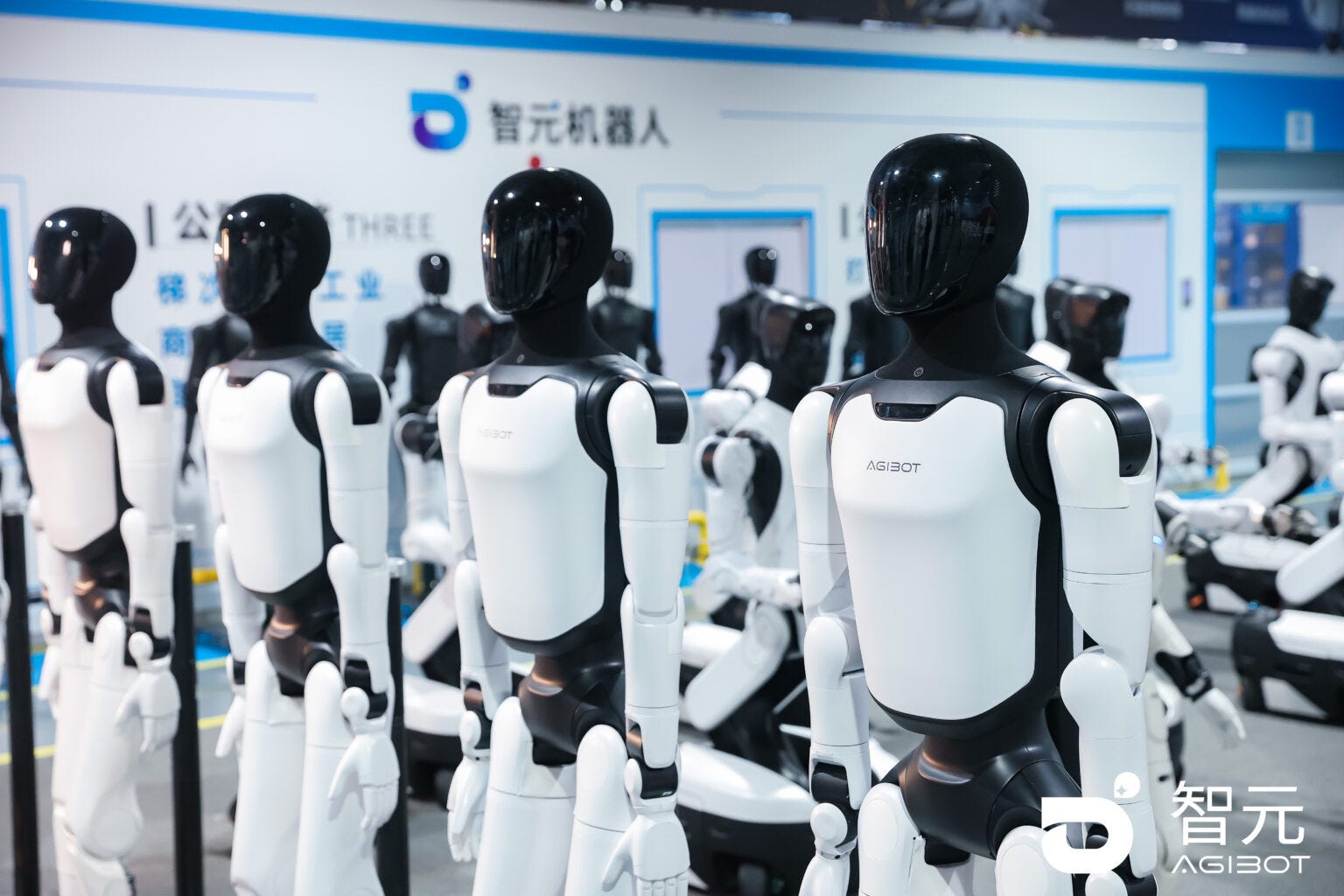
AGIBOT has announced the production of its 10,000th humanoid robot, marking a significant milestone in the commercialization and scalability of humanoid robotics. The achievement highlights the company’s rapid growth and signals increasing momentum in the development of human-like machines for real-world applications.
The milestone reflects the accelerating industrialization of humanoid robotics, driven by advances in artificial intelligence, perception systems, and manufacturing capabilities. AgiBot’s robots are designed to operate in diverse environments, supporting tasks across logistics, manufacturing, and service sectors, where flexibility and adaptability are essential.
This development underscores China’s expanding role in the global robotics landscape and demonstrates how humanoid robots are transitioning from research prototypes to scalable commercial solutions. As production volumes increase, the announcement signals growing confidence in the future deployment of humanoid systems across industry.
Why does this matter? Reaching this production milestone signals rapid progress in the scalability of humanoid robotics. As the technology evolves, it points to a future where adaptable robots can operate in dynamic environments, opening new possibilities for automation across logistics, manufacturing, and service sectors.
5 - AES Deploys Maximo Robot to Install 100 MW of Solar Capacity
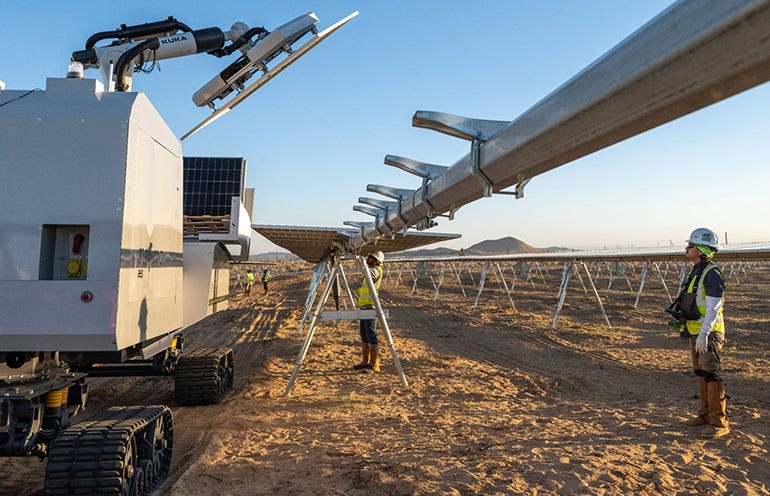
The AES Corporation has announced that its autonomous robotic system, Maximo, has successfully installed 100 megawatts (MW) of solar capacity. The milestone marks a significant advancement in the use of robotics to accelerate the deployment of renewable energy infrastructure.
Developed to automate the installation of solar panels, Maximo streamlines one of the most labour-intensive stages of solar farm construction. The robot is designed to enhance productivity, improve worker safety, and address labour shortages, while enabling faster and more efficient project delivery at scale.
The achievement highlights the growing role of robotics in the energy sector, demonstrating how automation is transforming renewable energy deployment. As demand for clean power increases worldwide, solutions like Maximo are helping to reduce installation timelines and support the global transition toward sustainable energy.
Why does this matter? The deployment of Maximo demonstrates how robotics is extending beyond factory floors into large-scale infrastructure and renewable energy projects. By improving efficiency, enhancing safety, and accelerating deployment timelines, such solutions highlight the expanding role of automation in supporting sustainable industrial growth.
Weekly Tutorial
How to restart your FANUC robot?
A power cycle can be a lifesaver for various errors. In this new video, I show you the safe and simple way to restart your robot.
👉 Watch the full step-by-step tutorial.
Good to Know:
I’m excited to share the first step from The Robot Queen Academy: the launch of the Robotics Mindset Community. Created for those who want to grow in robotics, the initiative focuses on developing both technical understanding and the mindset needed to navigate the industry with clarity and confidence.
The community offers a dedicated space to connect with like-minded professionals, engage in meaningful discussions about careers and learning, and participate in monthly live sessions led by me. Members will also receive early access to future trainings and exclusive opportunities designed to support their professional journey.
It’s for people who want to grow in robotics by changing how they think, not just what they know. Inside, you’ll find:
A focused space to connect with people on the same path
Real conversations about learning, careers, and growth in robotics
1 live session per month with me (Q&A, deep dives, practical topics)
Early access to future trainings and special conditions

Want more robotics content? 🤖
Watch my videos on YouTube @TheRobotQueen
Follow me on Instagram @therobotqueen_